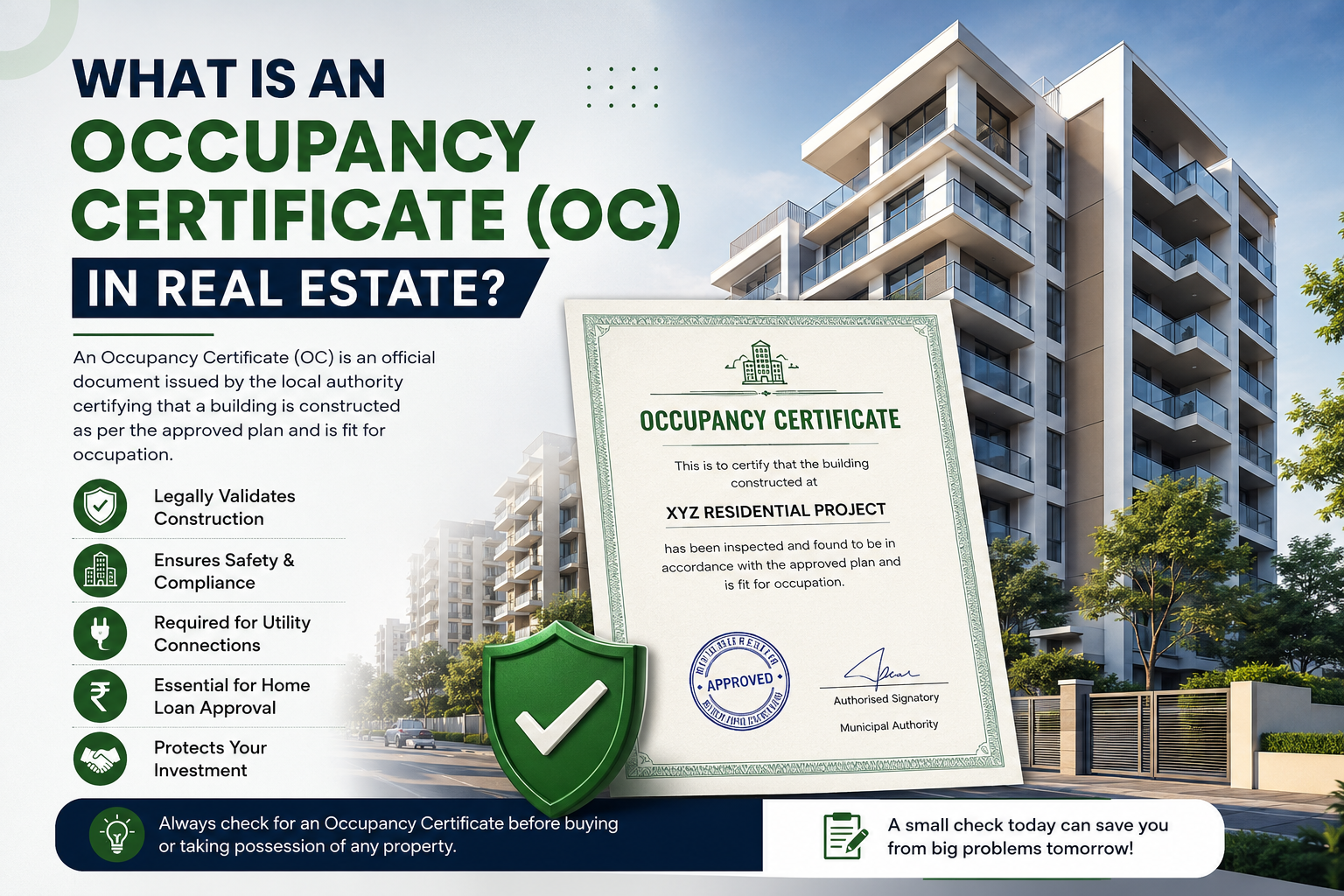
An Occupancy Certificate (OC) is an official document issued by the local municipal authority or development authority after inspecting a completed building. It certifies that the construction has been completed according to the approved building plan and complies with all applicable laws and safety standards.
The certificate also confirms that the building is safe and legally fit for occupation.
Without an Occupancy Certificate, a building is generally considered unauthorized for residential or commercial use, even if construction is complete.
Why is an Occupancy Certificate Important?
An Occupancy Certificate protects both homebuyers and property investors.
Here are some key reasons why it is important:
1. Confirms Legal Construction
The OC verifies that the builder has followed all approved plans, building regulations, and zoning laws.
2. Ensures Safety
Authorities inspect the building’s structural integrity, fire safety, water supply, drainage, sanitation, electricity, and other essential infrastructure before issuing the certificate.
3. Required for Utility Connections
Many local authorities require an Occupancy Certificate before granting permanent electricity, water, and sewerage connections.
4. Easier Home Loan Approval
Banks often prefer financing properties that have a valid Occupancy Certificate.
5. Protects Your Investment
Buying a property with a valid OC reduces legal risks and protects your investment from future disputes.
Who Issues an Occupancy Certificate?
The Occupancy Certificate is issued by the local municipal authority or urban development authority responsible for approving building plans.
Examples include:
- Municipal Corporation
- Development Authority
- Town Planning Department
- Urban Local Body
The builder submits an application after completing construction, and officials inspect the property before issuing the certificate.
When is an Occupancy Certificate Issued?
An Occupancy Certificate is issued only after:
- Construction is fully completed.
- Building plans have been followed.
- Safety inspections are passed.
- Fire safety norms are complied with.
- Water and sewage systems are operational.
- Structural requirements are met.
- Environmental guidelines are satisfied.
Only after successful inspection is the building declared fit for occupancy.
Difference Between Occupancy Certificate and Completion Certificate
Many buyers confuse an Occupancy Certificate with a Completion Certificate.
| Occupancy Certificate (OC) | Completion Certificate (CC) |
|---|---|
| Confirms building is fit for occupation | Confirms construction is complete |
| Issued after final inspection | Issued after construction completion |
| Required before residents move in | Indicates project completion only |
| Verifies safety and legal compliance | Verifies construction matches approved plans |
Both documents are important, but the Occupancy Certificate is essential before taking possession.
Documents Required to Obtain an Occupancy Certificate
The builder usually submits the following documents:
- Approved building plan
- Completion Certificate
- Structural stability certificate
- Fire safety clearance
- Lift safety certificate
- Environmental clearance (if applicable)
- Water and sewer connection approvals
- Property tax documents
- Photographs of completed construction
Authorities inspect these documents before issuing the Occupancy Certificate.
How to Verify an Occupancy Certificate
Before purchasing a property, buyers should verify the Occupancy Certificate.
Step 1
Ask the builder for a copy of the Occupancy Certificate.
Step 2
Check whether the certificate mentions:
- Property address
- Building details
- Approval number
- Date of issue
- Municipal authority seal
Step 3
Visit the local municipal authority’s website to verify the certificate if online verification is available.
Step 4
Consult a property lawyer if you have any doubts regarding the document.
Can You Buy a Property Without an Occupancy Certificate?
Technically, yes but it is not recommended.
Many under-construction projects may not yet have an Occupancy Certificate because construction is still ongoing.
However, purchasing a completed property without an OC can expose buyers to several risks.
Risks of Buying a Property Without an Occupancy Certificate
Legal Issues
The property may be treated as unauthorized construction.
Utility Problems
Permanent electricity, water, or sewage connections may not be approved.
Loan Difficulties
Banks may hesitate to finance such properties.
Lower Resale Value
Future buyers often avoid properties lacking proper documentation.
Risk of Penalties
Municipal authorities may impose fines or take legal action against unauthorized buildings.
Occupancy Certificate for Apartments
If you’re purchasing an apartment, ensure that the builder has obtained the Occupancy Certificate for the entire building before accepting possession.
A builder should not legally hand over possession without obtaining the OC.
Occupancy Certificate for Independent Houses
Independent homes constructed after obtaining proper approvals must also receive an Occupancy Certificate before occupation.
Owners constructing their own homes must apply through the local authority after construction is completed.
Is Occupancy Certificate Mandatory in India?
Yes.
In most Indian states, an Occupancy Certificate is mandatory for legally occupying a completed residential or commercial building.
State-specific regulations may vary slightly, but the requirement remains broadly applicable across India.
Common Reasons for Delay in Issuing an OC
Several issues can delay issuance:
- Unauthorized construction
- Deviations from approved plans
- Missing fire safety approvals
- Incomplete infrastructure
- Pending property taxes
- Environmental clearance issues
Builders must rectify these issues before the authority grants the certificate.
How Long Does it Take to Get an Occupancy Certificate?
The timeline varies by state and local authority.
Typically, the process takes 15 to 60 days after the builder submits all required documents and the inspection is completed.
Tips for Homebuyers
Before taking possession of any property:
- Verify the Occupancy Certificate.
- Check the Completion Certificate.
- Confirm RERA registration.
- Review the Sale Deed.
- Verify property tax records.
- Inspect the building physically.
- Consult a legal expert if needed.
Following these steps helps ensure a safe and legally secure purchase.
Frequently Asked Questions (FAQs)
What is an Occupancy Certificate in Real Estate?
It is an official certificate issued by the local authority confirming that a building complies with approved plans and is safe for occupation.
Is an Occupancy Certificate mandatory?
Yes, it is generally mandatory before occupying a completed residential or commercial building.
Can I get a home loan without an Occupancy Certificate?
Some banks may refuse financing or impose additional conditions if the property lacks an Occupancy Certificate.
Can I move into my flat without an OC?
It is not advisable. Occupying a property without an Occupancy Certificate may lead to legal and utility-related issues.
Who applies for the Occupancy Certificate?
The builder or developer usually applies after completing construction.
Can I verify the Occupancy Certificate online?
Many municipal authorities now provide online verification services through their official portals.
Final Thoughts
Understanding what is an Occupancy Certificate in Real Estate is essential for every homebuyer. While attractive pricing and premium amenities often influence buying decisions, legal documentation should never be overlooked.
An Occupancy Certificate confirms that the property complies with approved building plans, safety regulations, and municipal requirements. It also protects buyers from future legal complications and ensures access to essential services like water and electricity.
Before taking possession of any residential or commercial property, always verify that a valid Occupancy Certificate has been issued. A little due diligence today can save you from significant legal and financial challenges in the future.
Whether you’re a first-time homebuyer or an experienced investor, checking the Occupancy Certificate is one of the smartest steps you can take to secure your real estate investment.